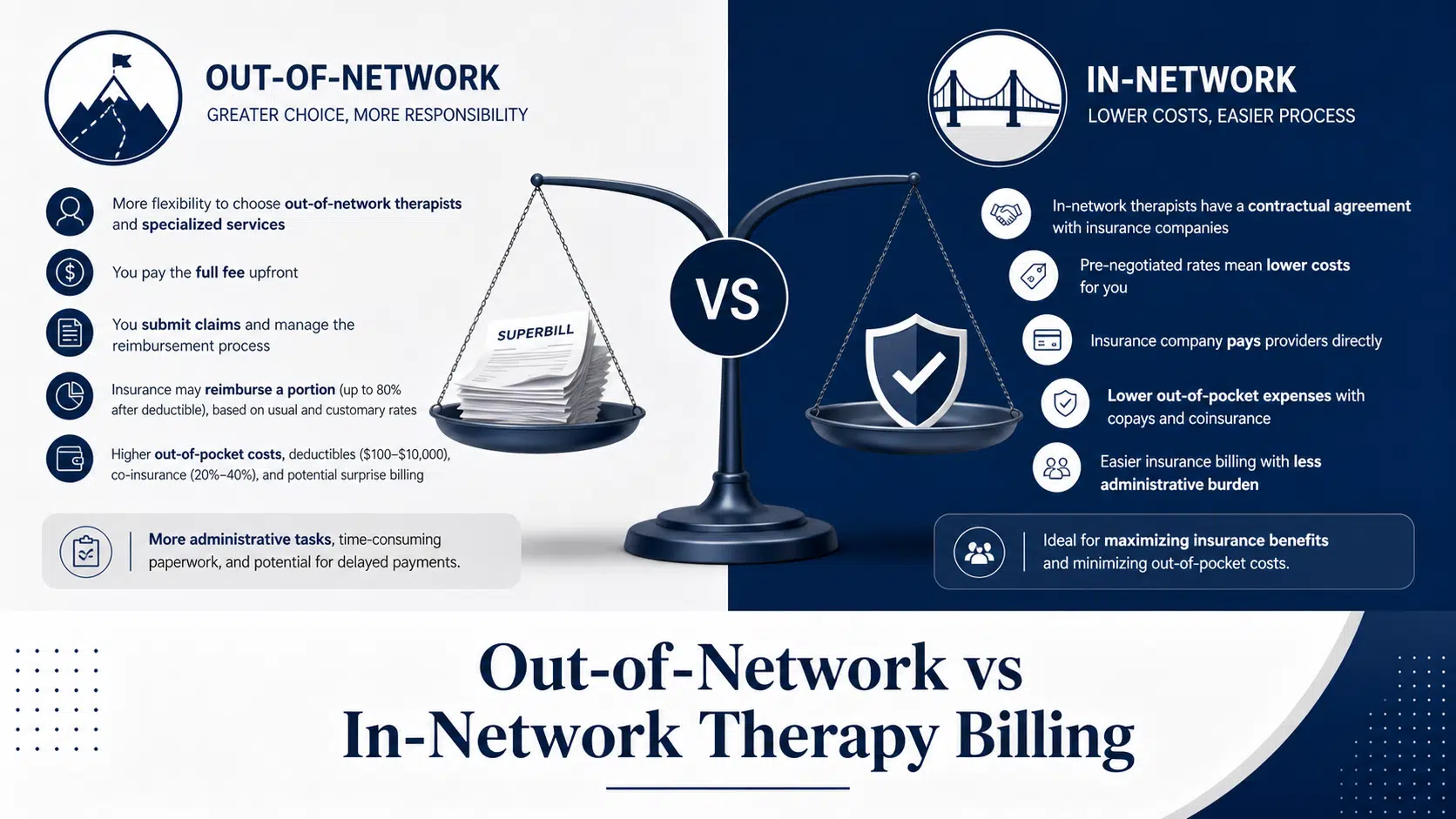
Out-of-Network vs In-Network Therapy Billing
10 min read
In behavioral health billing, there’s a hard truth most facilities don’t want to hear: by the time a claim hits your denial bucket, the damage is already done. At Cipher Billing, we’ve spent years analyzing denial patterns across substance abuse, mental health, and addiction recove
Cipher Admin
Cipher Billing Team
In behavioral health billing, there’s a hard truth most facilities don’t want to hear: by the time a claim hits your denial bucket, the damage is already done. At Cipher Billing, we’ve spent years analyzing denial patterns across substance abuse, mental health, and addiction recove
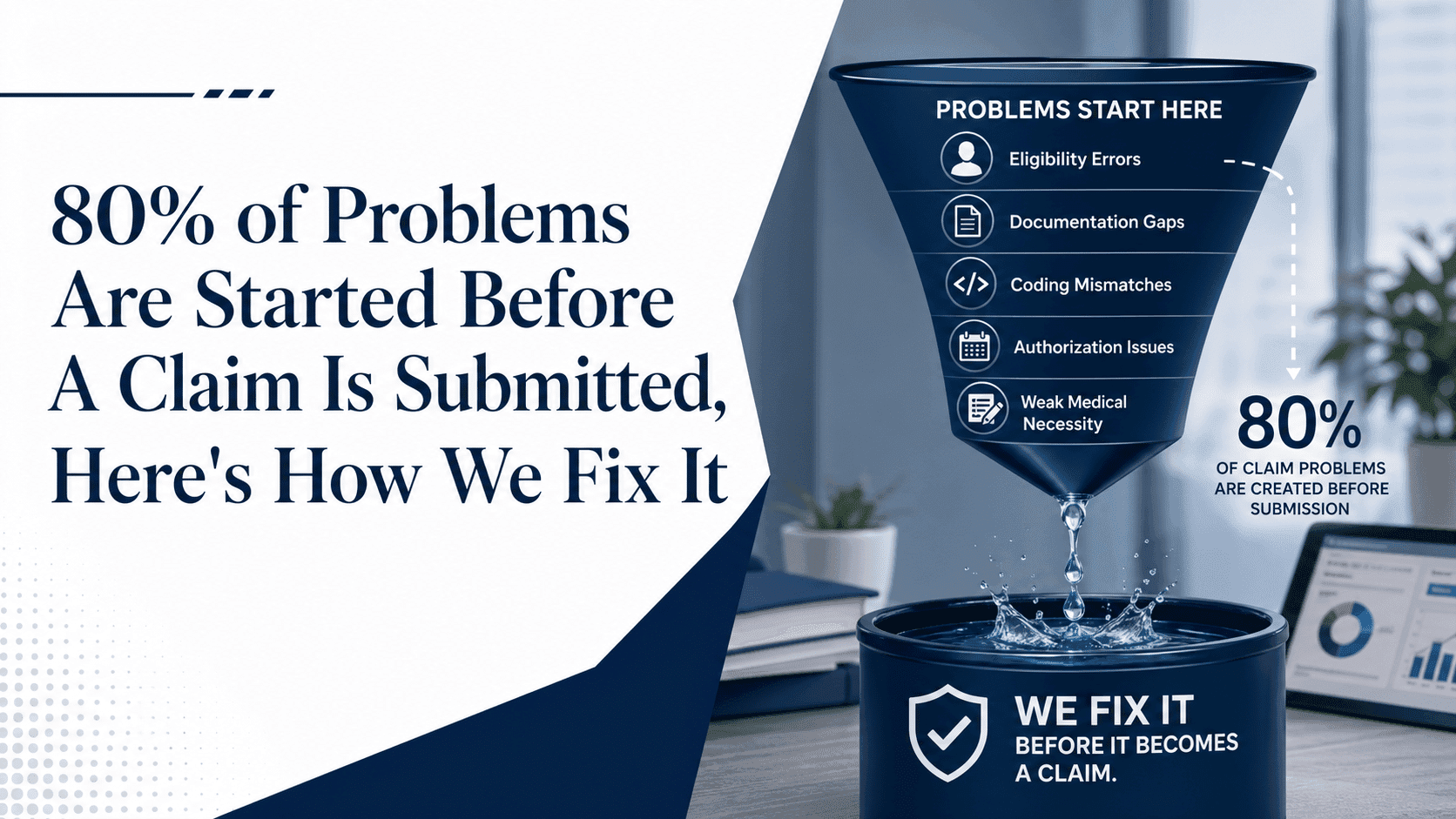
In behavioral health billing, there’s a hard truth most facilities don’t want to hear: by the time a claim hits your denial bucket, the damage is already done. At Cipher Billing, we’ve spent years analyzing denial patterns across substance abuse, mental health, and addiction recovery facilities, and the data tells a consistent story. Roughly 80% of claim problems are created before a claim is ever submitted. Documentation gaps, eligibility misreads, coding mismatches, and weak medical necessity narratives all happen upstream, then show up downstream as denied revenue.
The good news? If problems start before submission, that’s also exactly where they can be solved. Here’s how we fix the front end of the revenue cycle so the back end stops bleeding.
It’s tempting to blame insurance carriers for every denial. And yes, payers absolutely deny aggressively, especially for behavioral health and substance use disorder treatment. But when we audit a new facility’s books, we consistently see the same preventable issues:
According to the American Hospital Association, administrative complexity and payer policies are driving record-high denial rates across the country. And a 2024 Experian Health survey found that nearly three-quarters of providers say denials are increasing year over year. The facilities that survive this environment aren’t the ones with the best appeal letters. They’re the ones who stop denials from happening in the first place.
If your VOB process is slow, vague, or guesses at out-of-network benefits, you’ve already lost. A bad VOB doesn’t just delay admission, it sets the entire claim up to fail. Cost-share miscalculations, missed pre-authorization requirements, and mislabeled plan types all start here.
Cipher delivers full eligibility, cost-share, and out-of-network benefit data in 8 to 9 minutes, compared to the industry standard of 30. That speed isn’t a vanity metric, it’s the difference between admitting a patient confidently and submitting a clean claim weeks later, versus chasing a denial for “non-covered services” you should’ve caught at intake.
Inpatient, residential, PHP, and IOP each have distinct documentation requirements, and payers know exactly what they’re looking for. When clinical notes don’t reflect medical necessity for the billed level of care, denials are nearly automatic. The ASAM Criteria set the clinical standard for addiction treatment placement, and payers expect your documentation to align with it.
This is why Cipher conducts comprehensive prospective audits before any claims are submitted. We identify compliance risks, coding errors, and documentation gaps early, while there’s still time to fix them, not after the EOB rolls in with zeros.
Behavioral health coding isn’t general medical coding with different numbers. The CPT and ICD-10 nuances around substance use disorders, co-occurring conditions, and group versus individual therapy services are unforgiving. A generic biller will get you paid sometimes. A behavioral health specialist will get you paid consistently.
Cipher has operated exclusively in mental health and addiction recovery billing since 2017. That focus is why our clients see a 96% first-pass medical record approval rate and a 97% medical necessity appeal success rate.
Authorizations are where revenue quietly dies. A missed concurrent review, a late extension request, or a UR clinician who isn’t fluent in payer-specific language can shorten a patient’s stay and shrink your reimbursement, even when the clinical need is obvious.
The Kaiser Family Foundation has documented just how aggressively payers are using prior authorization to control utilization. Our UR team communicates daily with payers to secure complex authorizations, defend medical necessity, and extend stays when clinically warranted.
Every Cipher partnership starts with a deep, prospective audit of your documentation, coding patterns, and existing payer contracts. We don’t wait for denials to teach us where you’re vulnerable. We map the risks first, then build a billing workflow that closes them.
Our 8-to-9-minute VOB turnaround means your admissions team never has to choose between speed and accuracy. You get historical claim data, real cost-share figures, and out-of-network projections fast enough to support same-day admission decisions, with the precision to support clean claims weeks later.
Once documentation is solid, we submit same-day, with CPT and ICD-10 coding handled by people who do nothing but behavioral health. The result: 92% of claims are paid without any compliance intervention required, and our clients see their first payment within 30 days.
We review every claim before it goes out and every payment after it comes in. Underpayments get caught. Patterns get flagged. Nothing slips through, which is a major reason our clients maintain a write-off rate of just 1.88%, dramatically below industry averages reported by the Medical Group Management Association.
For OON-heavy facilities, weak negotiation costs millions. Cipher’s aggressive negotiation tactics produce an average 30.36% OON reimbursement rate, and when payers play games, we escalate, including to state insurance commissioners when necessary.
Whether you operate a residential treatment center, PHP, IOP, or outpatient mental health clinic, the math is the same. Every claim that’s denied because of a preventable upstream error is revenue you’ve already earned but won’t collect without a fight. Every clean claim that goes out the door is revenue that arrives on time, with less administrative drag on your team.
Our clients see consistent average patient day rates of $1,821.49 inpatient and $1,149.38 outpatient, not because of magic, but because the front end of their revenue cycle finally matches the quality of their clinical work.
What separates Cipher from generic billing companies isn’t just the metrics. It’s the partnership model behind them:
If 80% of your claim problems are starting before submission, then 80% of your revenue recovery opportunity is sitting upstream, untouched. The facilities winning in today’s payer environment are the ones who treat the front end of the revenue cycle as a clinical-grade process, not an admin afterthought.
That’s exactly what Cipher Billing was built to deliver: airtight compliance, transparent service, and real financial results so your team can focus strictly on patient care.
Ready to see what a higher level partnership looks like? Visit CipherBilling.com, call (949) 368-0575, or email info@cipherbilling.com to schedule a prospective audit of your billing operation. We’ll show you exactly where the upstream leaks are, and how we close them.
About the Author
Cipher Billing Team
In This Article
Cipher Billing specializes in behavioral health revenue cycle management. Reach out for a free consultation and see how we can maximize your reimbursements.