Out-of-Network vs In-Network Therapy Billing
10 min read
Behavioral health providers are facing a reimbursement crisis hiding in plain sight. While the broader healthcare industry battles claim denials at uncomfortable rates, behavioral health stands alone at the top of the list — fighting denial rates that can cripple cash flow, delay patient care, and s
Cipher Admin
Cipher Billing Team
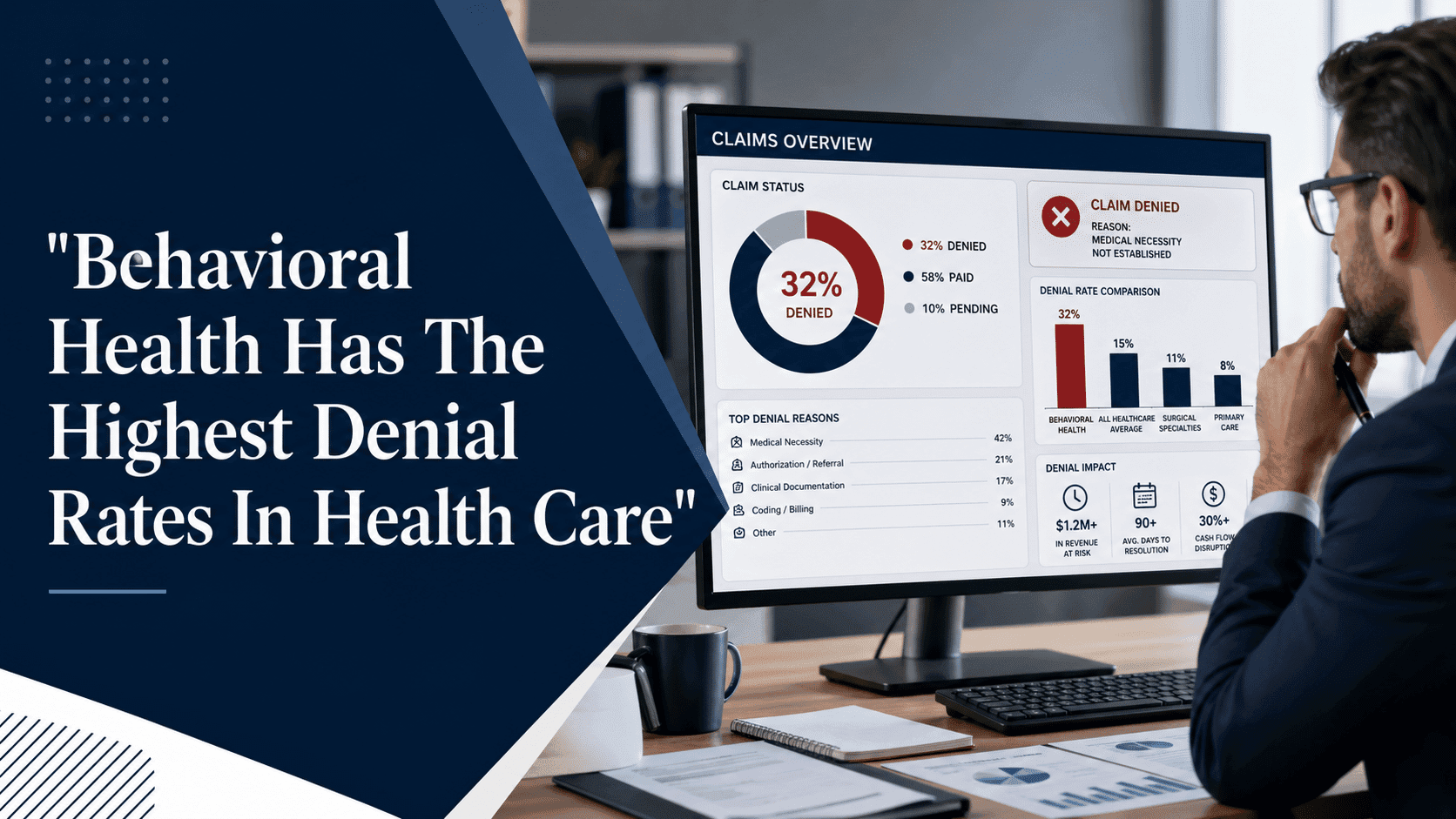
Behavioral health providers are facing a reimbursement crisis hiding in plain sight. While the broader healthcare industry battles claim denials at uncomfortable rates, behavioral health stands alone at the top of the list — fighting denial rates that can cripple cash flow, delay patient care, and s
Behavioral health providers are facing a reimbursement crisis hiding in plain sight. While the broader healthcare industry battles claim denials at uncomfortable rates, behavioral health stands alone at the top of the list — fighting denial rates that can cripple cash flow, delay patient care, and shutter even well-run facilities. If you operate a substance abuse treatment center, residential program, PHP, IOP, or outpatient mental health clinic, you’ve likely felt this firsthand. The question isn’t whether denials are rising. It’s why behavioral health gets hit hardest — and what you can do about it.
Across U.S. healthcare, claim denials are climbing fast. According to a recent American Medical Association survey, prior authorization burdens continue to escalate, with physicians reporting that denials and delays directly harm patient outcomes. But behavioral health sits in a category of its own.
An analysis published by KFF on ACA marketplace claims found that in-network denial rates frequently exceed 15% — and behavioral health providers consistently report denial rates significantly higher than that benchmark. Some facilities see 30% or more of their claims denied or downgraded on first submission.
The financial damage compounds quickly. Every denied claim represents staff hours wasted, delayed cash flow, and sometimes uncompensated patient stays. For behavioral health facilities operating on tight margins, denials aren’t just an inconvenience — they’re an existential threat.
Behavioral health denials aren’t random. They are the result of structural disparities baked into how payers handle mental health and substance use disorder claims. Here’s what’s really driving the numbers up.
Unlike a broken bone or a lab-confirmed infection, behavioral health diagnoses rely on clinical assessment, observation, and documentation. Payers often challenge whether residential, PHP, or IOP levels of care were “necessary” — even when ASAM criteria clearly support placement. A U.S. Department of Labor MHPAEA report to Congress found widespread non-compliance with mental health parity laws, with payers applying stricter medical necessity standards to behavioral health than to comparable medical services.
Behavioral health is uniquely burdened by ongoing utilization review. Payers may require updates every 3–7 days for residential or PHP stays, and any delay or weak documentation can trigger a denial that retroactively wipes out days of treatment.
CPT codes for individual therapy, group therapy, family therapy, H-codes, and revenue codes for facility-based care are nuanced — and constantly scrutinized. One incorrect modifier, missing time element, or vague progress note can flag the entire claim.
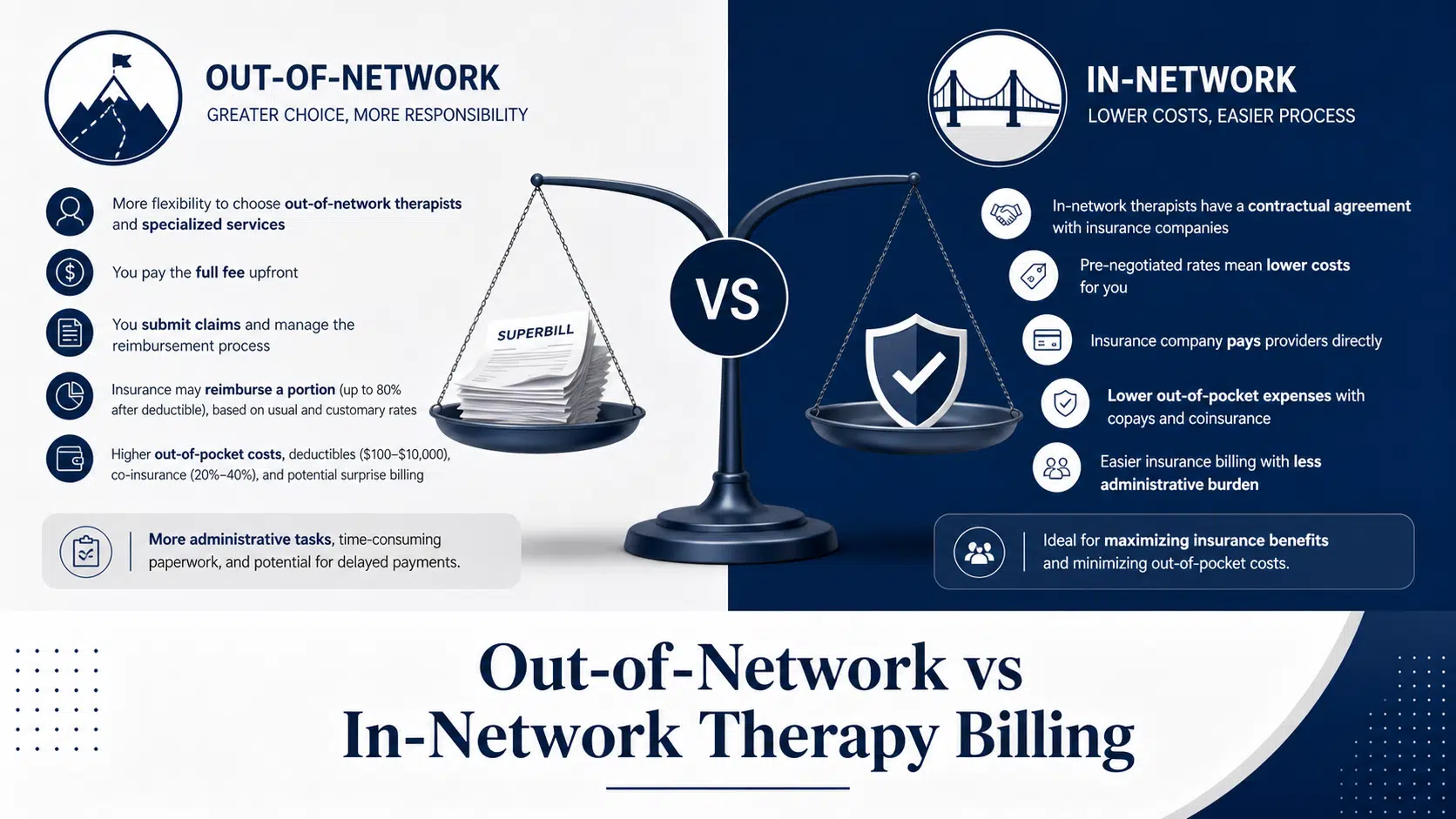
Many behavioral health facilities operate out-of-network, where payers slow-walk reimbursement, lowball single case agreements, and apply opaque “usual and customary” reductions. Without aggressive negotiation, OON reimbursement collapses.
Despite the Mental Health Parity and Addiction Equity Act, enforcement remains inconsistent. A U.S. Government Accountability Office report highlighted ongoing gaps in oversight, leaving behavioral health providers to fight payer behavior that wouldn’t be tolerated on the medical/surgical side.
It’s tempting to view denials as an administrative annoyance. The reality is far more severe.
According to a healthcare industry analysis on prior authorization trends, the administrative burden of payer denials continues to grow — and behavioral health bears a disproportionate share of that weight.
At Cipher Billing, we’ve operated exclusively in behavioral health billing and denial prevention since 2017. We don’t dabble in primary care, dermatology, or orthopedics. Mental health and addiction recovery is the only thing we do — and the numbers prove it works.
Most billing companies react to denials. Cipher prevents them. Our audit-based onboarding begins with a comprehensive prospective audit of your facility’s documentation, identifying compliance risks and coding gaps before a single claim is submitted. The result: 92% of claims paid without compliance intervention and a 96% first pass medical record approval rate.
Delayed verification kills admissions. Our Verification of Benefits turnaround averages just 8 to 9 minutes, dramatically faster than the 30-minute industry standard. You get full eligibility, cost-share, and out-of-network benefit data fast enough to admit patients without hesitation.
Our UR team communicates daily with payers to secure complex authorizations, defend medical necessity, and extend patient stays when clinically warranted. Combined with our 97% medical necessity appeal success rate, this protects both your revenue and your patients’ continuum of care.
When denials do occur, we don’t sit on them. Within 24 hours, our team performs root-cause analysis, launches appeals, and aggressively pursues unpaid claims. We escalate to insurance commissioners when necessary. That relentless advocacy is exactly why our write-off rate sits at just 1.88% — a fraction of the industry norm.
Through aggressive negotiation tactics, Cipher achieves an average 30.36% OON reimbursement rate, with average patient day rates of $1,821.49 inpatient and $1,149.38 outpatient. First payments typically arrive within 30 days.
Behavioral health facilities don’t need another generic billing vendor. They need a partner who understands ASAM criteria, parity law, payer behavior patterns, and the specific CPT/ICD-10 coding nuances that define this space.
Whether or not you partner with Cipher, every behavioral health facility should be evaluating these key areas to reduce denials immediately:
Behavioral health has the highest denial rates in healthcare for reasons that are systemic, structural, and stubborn. But denials aren’t inevitable. With the right billing partner, the right documentation discipline, and a relentless approach to advocacy, your facility can flip the script — protecting your revenue and your patients at the same time.
That’s exactly what Cipher Billing was built to deliver: A Higher Level Partnership that combines airtight compliance, transparent service, and real financial results so you can focus strictly on patient care.
If you’re tired of watching denials erode your margins and disrupt patient care, it’s time for a conversation. Cipher Billing partners exclusively with behavioral health facilities — and we’d love to show you what airtight RCM actually looks like.
Stop accepting denials as the cost of doing business in behavioral health. Partner with Cipher — and start collecting what you’ve already earned.
About the Author
Cipher Billing Team
In This Article
Cipher Billing specializes in behavioral health revenue cycle management. Reach out for a free consultation and see how we can maximize your reimbursements.