Out-of-Network vs In-Network Therapy Billing
10 min read
Operating a behavioral health facility is incredibly rewarding, but managing the complexities of the revenue cycle can often feel overwhelming. Balancing high-quality patient care with the constantly growing administrative workload is a relentless struggle for many billing teams. Unfortunately, reve
Cipher Admin
Cipher Billing Team
Operating a behavioral health facility is incredibly rewarding, but managing the complexities of the revenue cycle can often feel overwhelming. Balancing high-quality patient care with the constantly growing administrative workload is a relentless struggle for many billing teams. Unfortunately, reve
Operating a behavioral health facility is incredibly rewarding, but managing the complexities of the revenue cycle can often feel overwhelming. Balancing high-quality patient care with the constantly growing administrative workload is a relentless struggle for many billing teams. Unfortunately, revenue leakage is a common problem in this industry, often stemming directly from inefficient billing workflows and a lack of front-end oversight. To combat this, facilities need a rock-solid, repeatable system. Implementing a comprehensive denial-prevention checklist for behavioral health organizations is the most effective way to safeguard your financial stability and ensure you are fairly compensated for the crucial services you provide.
Mental health billing is notoriously more complex than general medical billing. The rules surrounding behavioral health services are constantly changing, and providers face heavy, ongoing scrutiny from commercial payers, Medicare, and Medicaid programs alike. In 2023, 30% of mental health claims were denied, compared to only 19% of all other claims, highlighting the unique challenges faced in behavioral health billing due to coding errors and documentation discrepancies.
This stark statistical difference proves that healthcare organizations providing mental health services must adopt specialized, proactive strategies. Relying on outdated general medical billing processes will inevitably lead to high denial rates and revenue loss.
When insurance claims bounce back, your facility suffers immediate and tangible revenue loss. It costs significant time and resources for billing teams to investigate and rework denied claims. This can severely delay payment, disrupt your financial performance, and impact your daily operations. Up to 90% of denied claims are easily avoidable, underscoring the importance of effective claim-handling processes in behavioral health.
Understanding the root cause of rejections is the absolute first step in effective denial prevention. Often, these issues trace back to the very beginning of the patient journey. By the time a claim reaches the insurance company, the damage is already done. Behavioral health organizations can significantly reduce common denials by focusing on front-end accuracy throughout the entire claim lifecycle.
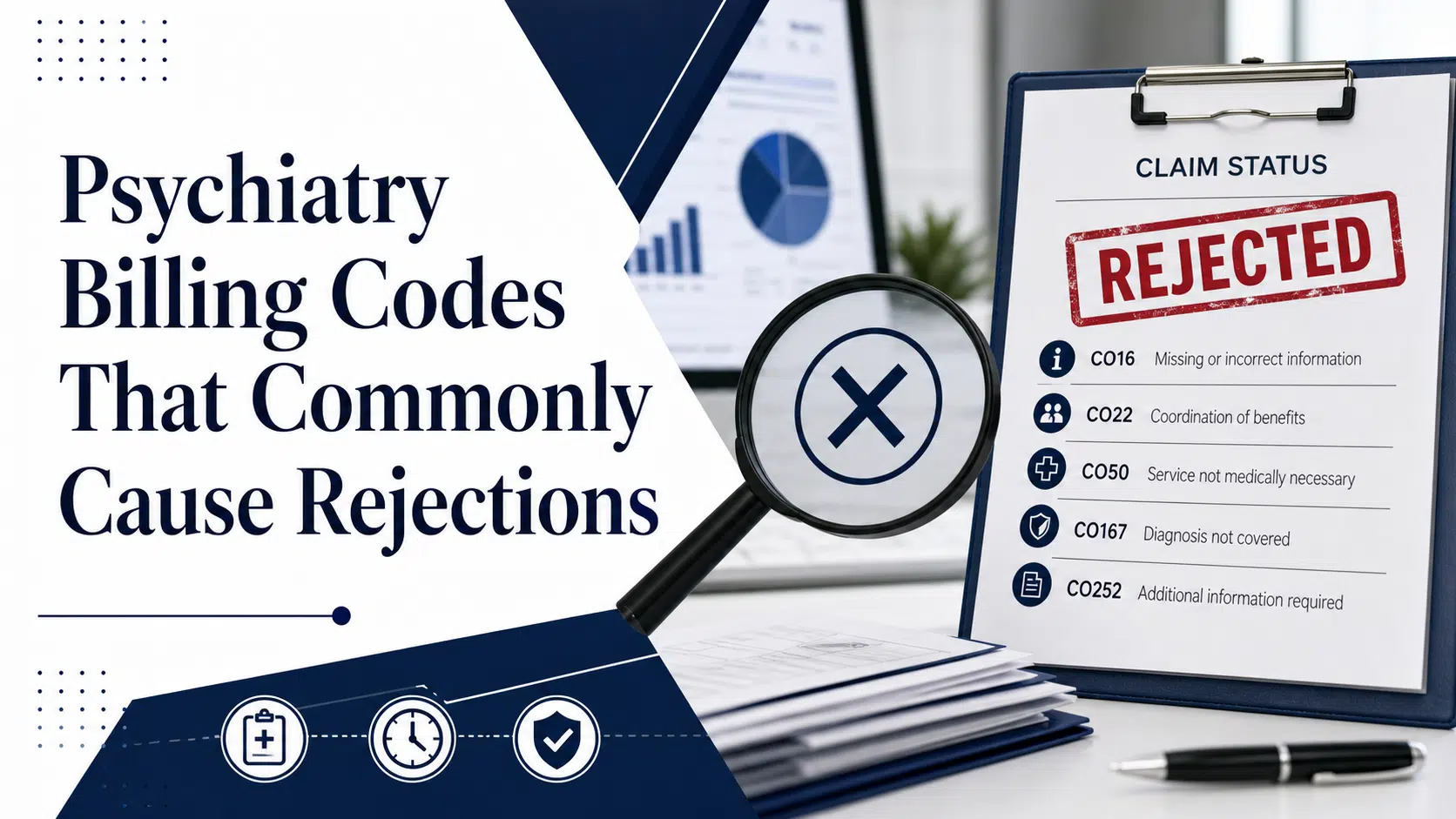
A single denial reason can range from a simple administrative typo to complex, multifaceted clinical disputes over covered services. Common reasons for behavioral health claim denials include missing pre-authorization, insufficient clinical documentation, coding errors, missed timely filing deadlines, and non-covered services. Other claims might be rejected simply because duplicate claims were submitted in error, or because patient session limits were exceeded for the calendar year.
Simple human error accounts for a massive portion of revenue cycle issues. Billing errors, such as misspelling a patient’s name, entering the wrong date of birth, or selecting the wrong taxonomy codes, will result in immediate rejection by the payer. Automated scrubbing tools can help identify errors such as missing data and mismatched codes, ensuring a clean claim submission before the file ever leaves your behavioral health EHR.
Unlike general medical billing, behavioral health heavily relies on subjective clinical assessments rather than simple lab results or X-rays. Insurance companies demand rigorous proof that the treatment plans provided are clinically justified. This is known as proving medical necessity. If you cannot successfully demonstrate medical necessity, your behavioral health claims will be rejected instantly.
So, how do behavioral health providers satisfy these strict payer requirements and secure their mental health benefits? Medical necessity support requires documentation of the patient’s symptoms, severity, and rationale for the treatment in clinical notes. Using standardized clinical note templates helps capture required regulatory elements consistently, aiding in the justification of treatment plans and streamlining the entire review process.
Accurate and complete clinical documentation is essential, as poor documentation is a leading cause of payment denials in mental health billing. Insufficient clinical documentation is a frequent cause of denials because payers require proof that treatment is medically necessary, and vague or incomplete notes can trigger denials. Ensuring your team is trained to capture every detail will directly support denial prevention.
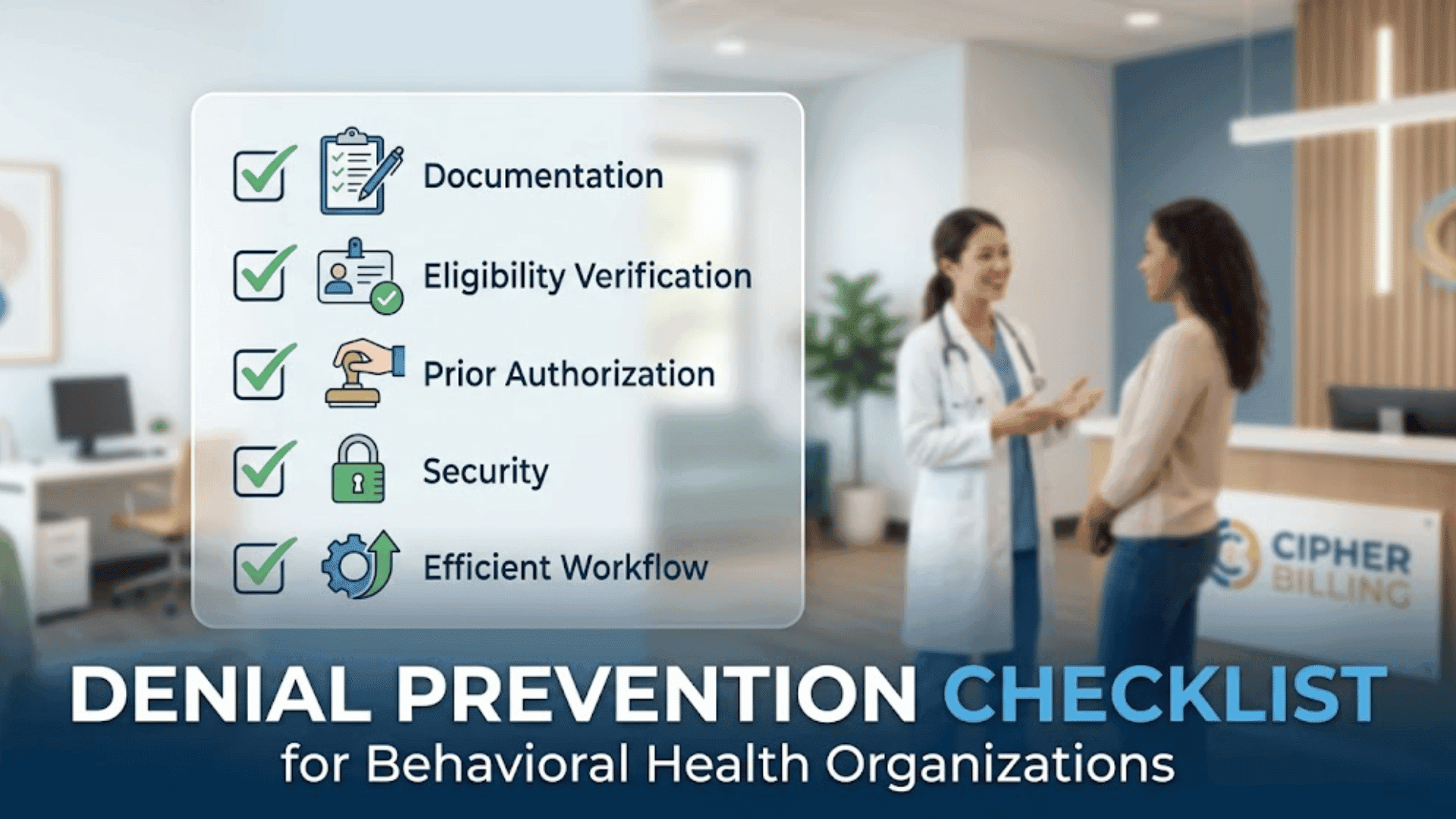
A denial prevention checklist in behavioral health should encompass front-end verification, accurate clinical documentation, and precise coding. By implementing the following steps meticulously, your staff can drastically reduce frequent claim denials and streamline your billing workflows.
Effective denial prevention strategies should include real-time eligibility checks at every visit to confirm insurance coverage, deductibles, and co-pays. Verifying patient eligibility before each visit can prevent over 50% of rejected claims, making it a critical step in the billing process. You must verify insurance eligibility regularly—never assume a patient’s insurance coverage remains unchanged. At Cipher Billing, our Rapid VOB (Verification of Benefits) turnaround delivers historical data and eligibility in just 8 to 9 minutes, far outpacing the industry standard of 30 minutes. This ensures you can confidently verify patient eligibility and never delay patient admissions.
Accurate coding is crucial for behavioral health claims because incorrect codes can lead to claim denials, reimbursement delays, and potential legal issues. Coding errors, such as using the wrong CPT code or modifier, are among the most preventable causes of claim denials in behavioral health, as accurate coding is crucial for reimbursement. Using the correct ICD-10 and CPT codes is crucial for mental health services, as coding errors can lead to audits and denials. Ensure your billing teams use the highest level of specificity in diagnosis codes to submit clean claims.
Failing to secure proper authorization before initiating treatment is a guaranteed way to experience revenue leakage. Implementing a pre-authorization system to verify coverage before services are provided can significantly reduce the risk of claims being denied due to authorization issues.
Always double-check patient demographics at the front desk. A simple mismatch between your internal records and the insurance company database will stall the process, preventing your team from submitting clean claims on the first pass.
Effective denial management for behavioral health should be an ongoing process that includes tracking denial patterns and implementing targeted improvements to strengthen billing workflows and reimbursement outcomes. You simply cannot fix what you do not measure.
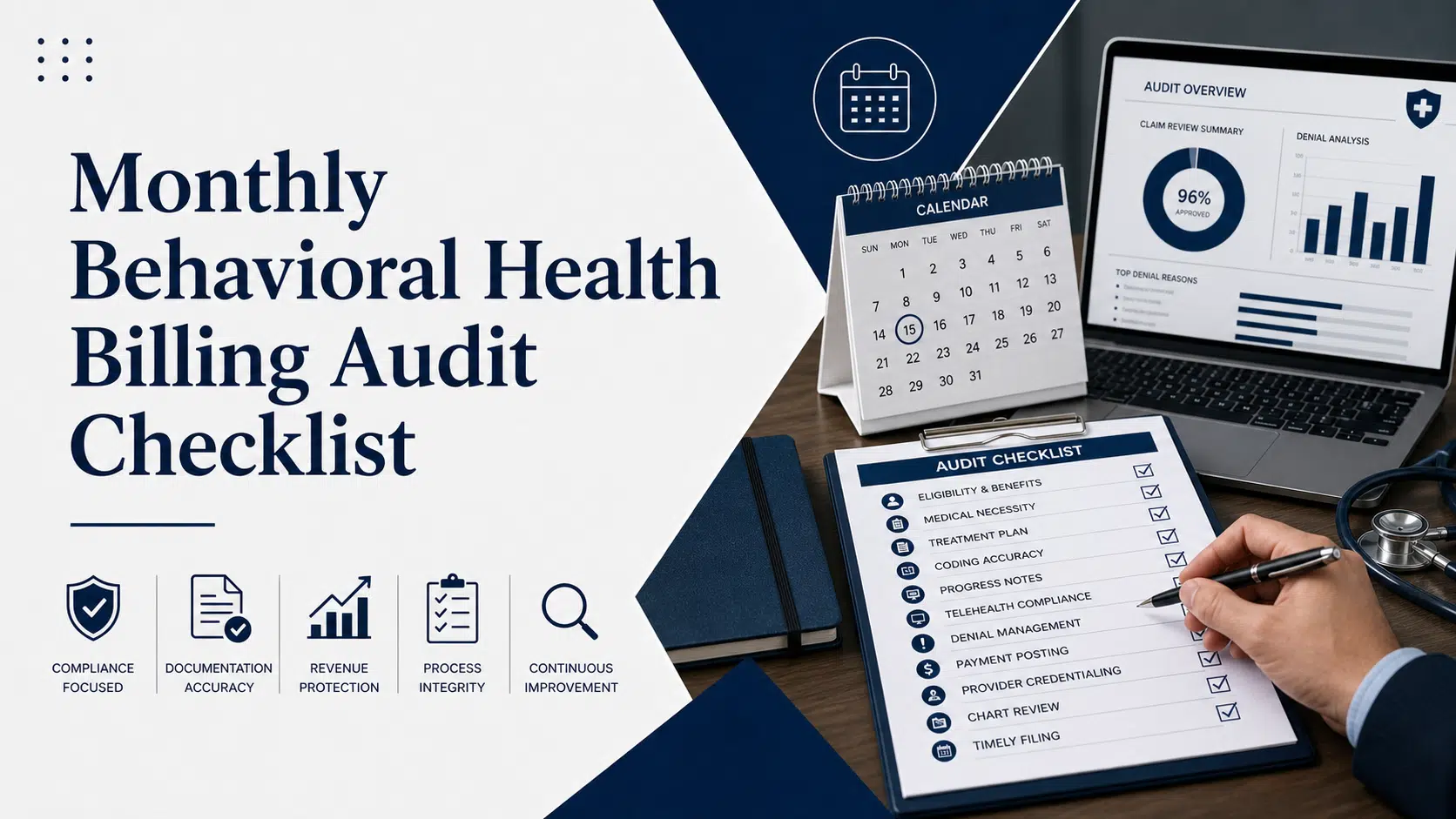
Tracking historical denial data can identify the top reasons for denials and guide the focus of denial-prevention checklists. You need to meticulously gather all denial data to see the big picture of your facility’s financial performance. Implementing regular internal audits can help prevent errors from escalating and ensure compliance with billing standards. Furthermore, regularly reviewing past denials can help identify recurring issues, enabling practices to establish best practices and develop staff training to reduce future denials.
Look for distinct operational trends. Are certain cpt codes constantly flagged by specific commercial payers? Are your claims being repeatedly denied for non-covered services? Quarterly training for staff on new codes and payer policies is essential for effective denial prevention.
Even with the absolute best preparation, some behavioral health claim denials will still inevitably occur. Fortunately, most denied claims can be recovered through a structured appeal process, which includes reviewing the denial reason code, gathering supporting documentation, and submitting a clinical appeal letter within payer deadlines. Staying informed on CMS billing guidelines and referencing current behavioral health billing strategies from industry authorities like Practolytics can drastically improve your facility’s appeal success rates.
Every single insurance company enforces incredibly strict rules regarding timely filing issues. If you miss payer deadlines, the appeal will be dismissed without review, turning a temporary delay into a permanent write-off. Aggressive denial management is the key to recovery.
Achieving high denial rates is simply not an option if you want your mental health facility to scale and thrive. You need a higher-level partnership. Cipher Billing operates exclusively in mental health and addiction recovery billing. We maintain an exceptionally low 1.88% write-off rate and a 96% first pass medical record approval rate. Thanks to our EHR-agnostic integration and dedicated U.S.-based Partner Experience Executives, we ensure 92% of your claims are paid without any compliance intervention. Our 24-hour denial response system ensures we aggressively pursue unpaid claims, boasting a 97% Medical Necessity Appeal Success Rate.
Navigating accurate billing, appealing behavioral health claim denials, and securing high out-of-network reimbursements (where we average 30.36%) requires dedicated experts. Partnering with us provides the exact professional assistance needed to completely overhaul your revenue cycle. Let Cipher Billing help you enhance cash flow, drastically increase your volume of clean claims, and let your clinicians focus strictly on what matters most: patient care.
About the Author
Cipher Billing Team
In This Article
Cipher Billing specializes in behavioral health revenue cycle management. Reach out for a free consultation and see how we can maximize your reimbursements.