
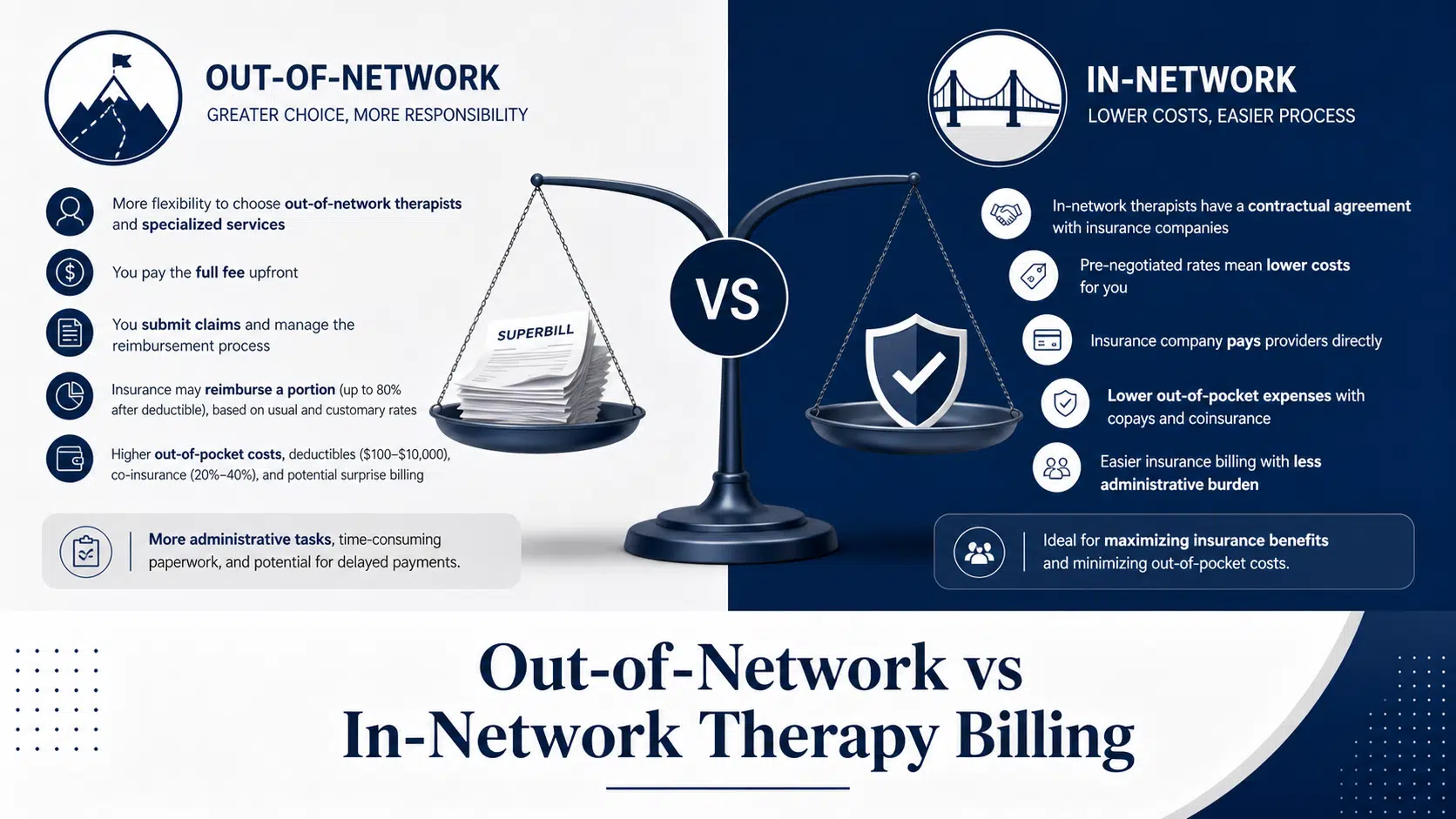
Out-of-Network vs In-Network Therapy Billing
10 min read
Behavioral health practices live and die by the strength of their billing operations. With payers tightening scrutiny, telehealth rules evolving, and documentation expectations growing, even a single overlooked detail can spiral into denials, lost revenue, and compliance headaches. That’s why
Cipher Admin
Cipher Billing Team
Behavioral health practices live and die by the strength of their billing operations. With payers tightening scrutiny, telehealth rules evolving, and documentation expectations growing, even a single overlooked detail can spiral into denials, lost revenue, and compliance headaches. That’s why
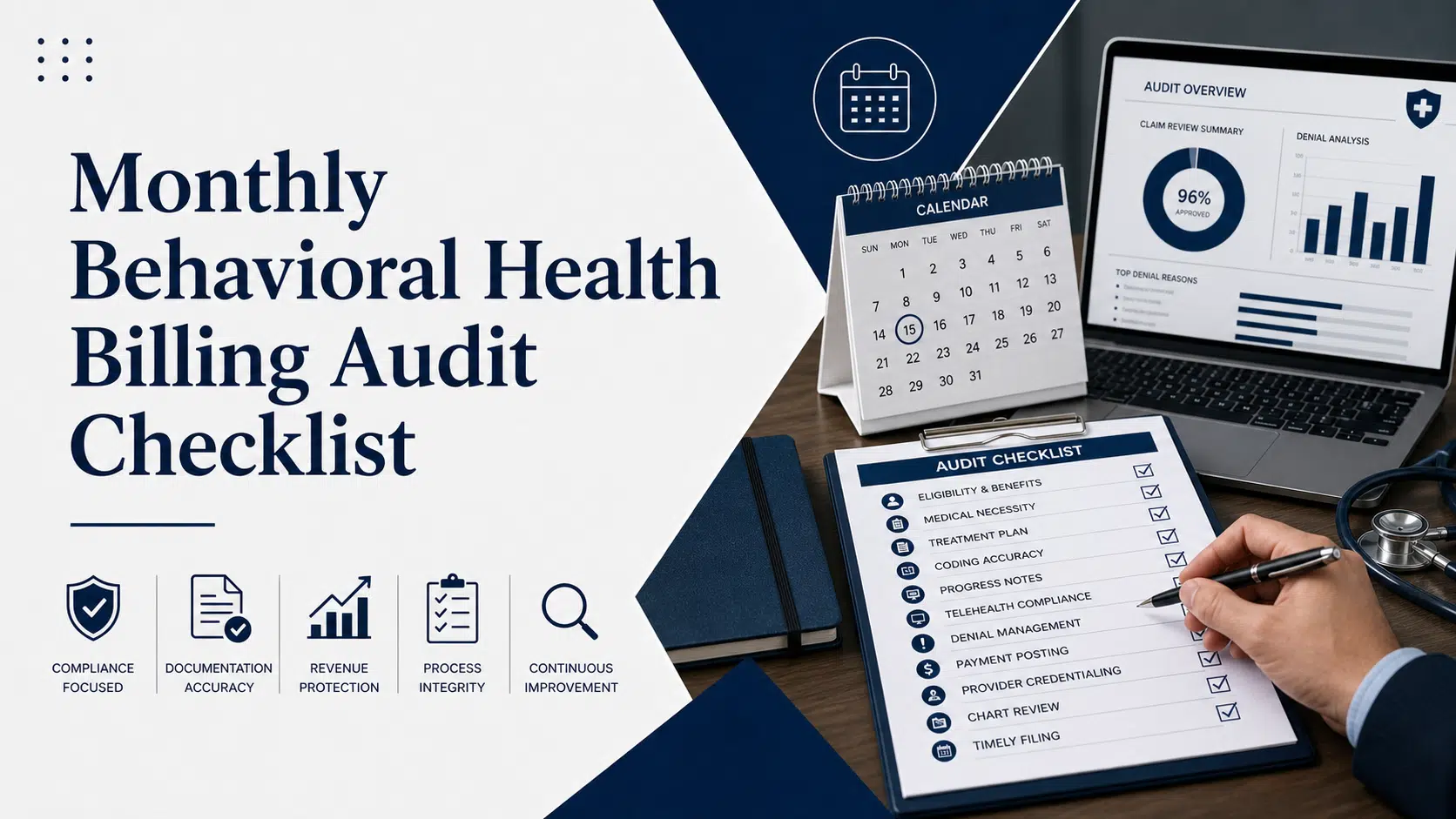
Behavioral health practices live and die by the strength of their billing operations. With payers tightening scrutiny, telehealth rules evolving, and documentation expectations growing, even a single overlooked detail can spiral into denials, lost revenue, and compliance headaches. That’s why a structured, repeatable monthly behavioral health billing audit checklist is no longer optional—it’s the heartbeat of a financially healthy practice.
In this guide, we’ll walk you through every component of a high-impact monthly audit, from medical necessity documentation to CPT codes, telehealth billing, denial trends, and compliance standards. Whether you run an outpatient mental health clinic, an IOP, or a residential program, this checklist will help you reduce denials, prevent revenue leakage, and protect your revenue cycle.
Behavioral health billing carries layers of complexity that general medical billing simply doesn’t. Between session limits, prior authorization rules, time based codes, and payer-specific documentation requirements, the margin for error is narrow. Regular internal audits are essential for identifying compliance gaps in billing practices, helping to prevent errors from escalating into significant issues.
According to the American Psychological Association, mental health providers face disproportionately high audit rates compared to other medical services—making proactive review a financial survival tool.
Without monthly audits, billing errors compound silently. Missing documentation, incorrect coding, and weak medical necessity language quietly drain cash flow. Practices often discover the damage only after rejected claims pile up or a payer launches a formal review.
A consistent audit checklist transforms your billing process from reactive to proactive. It surfaces denial trends, validates coding accuracy, and ensures every claim submission is supported by adequate documentation—safeguarding both compliance and financial stability.
Accurate verification of patient eligibility before each visit is crucial, as it can prevent over 50 percent of rejected claims in behavioral health billing. Eligibility verification should be the first stop in any medical billing audit checklist.
At Cipher Billing, we deliver full Verification of Benefits in 8–9 minutes—far below the 30-minute industry standard—so providers never delay admissions or risk eligibility-related denials.
Every behavioral health billing claim must demonstrate medical necessity through comprehensive documentation that links symptoms, functional impairments, and treatment goals. Weak medical necessity language can sink even technically correct claims.
Medical necessity documentation is essential for justifying the services billed in behavioral health, as it connects the patient’s symptoms, diagnosis, and treatment interventions. The Centers for Medicare & Medicaid Services emphasizes medical necessity as the foundation of defensible claims across all medicare and medicaid services.
An active treatment plan should contain measurable, time-bound goals updated prior to the service dates. Incomplete treatment plans are one of the most common audit findings for behavioral health providers.
Common documentation gaps that lead to audit findings include incomplete treatment plans, vague medical necessity language, and missing required signatures.
CPT codes must match the documented session length and diagnosis. Behavioral health coding is highly specific, and regular training on quarterly updates for CPT and ICD codes is necessary to avoid billing errors.
Accurate coding aligns what was performed with what is billed, requiring cross-checking of all codes to documentation using CPT, HCPCS, and ICD guidelines published by the American Medical Association.
Progress notes should include specific interventions used, the patient’s response to treatment, session start and end times, and the provider’s signature and credentials. Clinical notes are the evidentiary backbone of every claim.
In 2026, behavioral health billing compliance requires adherence to telehealth regulations, accurate time-based coding, and comprehensive documentation to avoid claim denials and ensure proper reimbursement.
Denials are signals that indicate underlying issues in the billing process, and effective denial management involves categorizing, analyzing, and addressing these root causes to reduce denial rates and improve cash flow.
Denial trends should be categorized to perform root-cause analysis and identify upstream workflow issues. Track patterns monthly to prevent recurrence and reduce denials. The Healthcare Financial Management Association recommends monthly denial review as a core revenue cycle discipline.
Review for duplicate claims for the same patient and provider on the same day. Payment posting should reconcile EOBs against billed amounts to ensure correct contractual adjustments.
Provider status should include verification that the rendering provider’s CAQH profile and license are active and match enrollment data. A mismatch here triggers automatic claim denials regardless of documentation quality.
A monthly behavioral health billing audit should evaluate 5–10 random charts per provider to ensure clinical documentation directly justifies every billed claim. This sampling approach catches systemic issues without overwhelming staff.
Timely filing of claims must be ensured to avoid denial due to late submissions. Each payer has unique deadlines—some as tight as 90 days—and missing them means automatic revenue loss with no appeal path.
A strong compliance checklist isn’t a one-time document. It evolves with payer rules, regulatory updates, and your billing system capabilities. Use your monthly audit findings to refine the compliance checklist continuously.
At Cipher Billing, audits aren’t an afterthought—they’re the foundation. Our audit-based onboarding identifies compliance risks before the first claim ever goes out the door. With a 96% first-pass medical record approval rate and a 97% medical necessity appeal success rate, we turn audit insights into measurable financial outcomes for behavioral health services.
A disciplined monthly audit protects more than your bottom line—it protects your ability to deliver uninterrupted patient care. By systematically reviewing eligibility, documentation, coding, denials, and telehealth compliance, your practice builds resilience against payer scrutiny and revenue volatility.
If you’re ready to stop chasing denials and start preventing them, Cipher Billing is here as a higher level partnership. Contact us at (949) 368-0575 or info@cipherbilling.com to schedule a complimentary audit consultation and see what airtight billing really looks like.
About the Author
Cipher Billing Team
In This Article
Cipher Billing specializes in behavioral health revenue cycle management. Reach out for a free consultation and see how we can maximize your reimbursements.