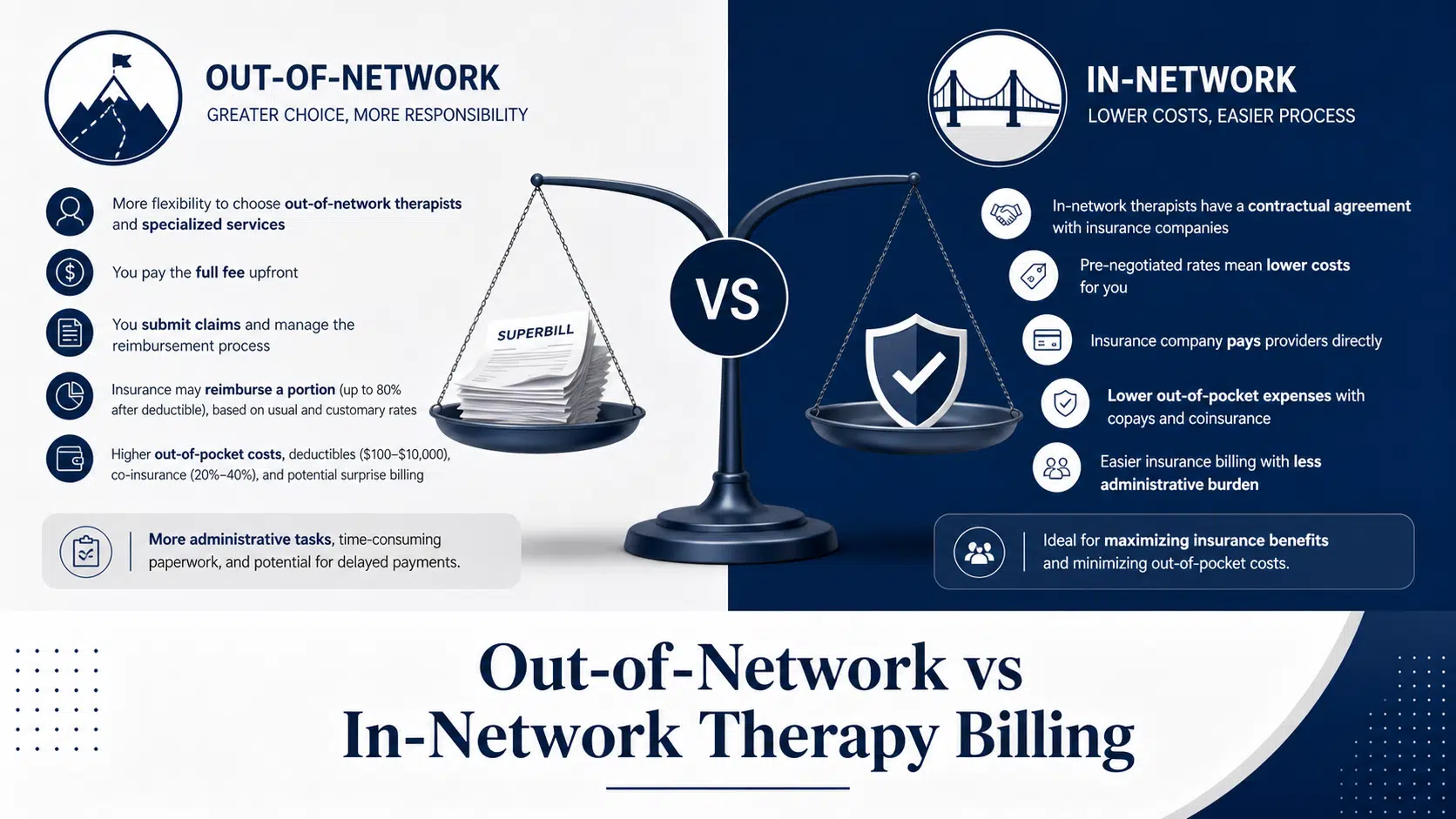
Out-of-Network vs In-Network Therapy Billing
10 min read
Picking up the phone is the easy part. What happens in the minutes, hours, and days that follow that first call from a prospective patient is where treatment centers either win or lose, financially and clinically. The pre-admission window is one of the most operationally critical and often most chao
Cipher Admin
Cipher Billing Team

Picking up the phone is the easy part. What happens in the minutes, hours, and days that follow that first call from a prospective patient is where treatment centers either win or lose, financially and clinically. The pre-admission window is one of the most operationally critical and often most chao
Picking up the phone is the easy part. What happens in the minutes, hours, and days that follow that first call from a prospective patient is where treatment centers either win or lose, financially and clinically. The pre-admission window is one of the most operationally critical and often most chaotic phases of the entire revenue cycle. Get it right, and you’ve set the stage for a smooth admission, faster reimbursement, and better patient outcomes. Get it wrong, and you’re staring down denied claims, delayed admissions, and patients who slip away before they ever walk through your doors.
At Cipher Billing, we’ve spent years inside the engine room of behavioral health and addiction treatment intake. Here’s exactly what should be happening between that first ring and the moment a patient is officially admitted, and why every minute counts.
When someone calls a treatment center, they’re rarely just shopping around. They’re often in crisis, or a family member is. According to the Substance Abuse and Mental Health Services Administration (SAMHSA), only a small fraction of people who need substance use treatment actually receive it, and one of the biggest barriers is the friction between reaching out and getting admitted.
That first call needs to accomplish several things almost simultaneously:
The clock starts ticking the moment the call ends. In the behavioral health space, the window of willingness can close fast. If a patient hesitates, relapses, or simply changes their mind, the opportunity disappears, and so does the chance to help them.
Once intake captures the patient’s insurance details, the next move is Verification of Benefits. This is where most facilities lose precious time and where Cipher consistently outperforms the industry.
The industry standard for a complete VOB is roughly 30 minutes. Cipher delivers full eligibility, cost-share, and out-of-network benefit data in 8 to 9 minutes. That difference isn’t cosmetic. It’s the difference between catching a patient while they’re still on the phone, or losing them to a competitor who got back to them first.
A thorough VOB should include:
Skipping or rushing this step is one of the most common reasons claims get denied weeks later. The American Medical Association has consistently flagged eligibility and prior authorization issues as leading drivers of administrative burden and denied reimbursements.
For most behavioral health levels of care—Detox, Residential, PHP, and IOP—payers require pre-authorization before admission. This is where the clinical and billing worlds collide, and where having a partner who speaks both languages is non-negotiable.
Pre-authorization isn’t just a checkbox. The payer wants to see clinical documentation that justifies medical necessity according to criteria like ASAM or LOCUS. If your intake or admissions team submits a weak clinical picture, the payer will either deny the auth or approve a level of care below what the patient actually needs.
This is where Cipher’s Utilization Review team steps in. We work with admissions and clinical teams to ensure the initial authorization request is bulletproof, presenting the patient’s clinical presentation in a way that aligns with payer criteria without overstating or understating the situation.
The documentation captured during the first phone call and pre-admission assessment forms the backbone of every future appeal. If a payer denies a claim three months later, what you wrote down on day zero is what saves you. Cipher maintains a 97% medical necessity appeal success rate, and that number is only possible because we obsess over documentation quality from the very first contact.
Before a patient ever steps through the door, they should understand exactly what they’re financially responsible for. Sticker shock during or after treatment is a leading cause of patient dissatisfaction and unpaid balances.
A clean pre-admission financial conversation includes:
For out-of-network facilities, this conversation is even more critical. Cipher achieves an average 30.36% OON reimbursement through aggressive negotiation, but patients still need to understand their role in the equation upfront.
Once benefits are verified and authorization is secured, clinical intake takes the lead. The patient is assessed for appropriateness, transportation is coordinated, and the bed is held. But even here, billing doesn’t disappear.
Every piece of information gathered during the clinical assessment feeds back into the billing pipeline. CPT codes, ICD-10 diagnoses, the level of care assigned, and the anticipated length of stay all need to align with what was authorized. A mismatch between what the payer authorized and what the clinical team actually delivers is one of the fastest paths to a denial.
According to the Centers for Medicare & Medicaid Services, coding accuracy and documentation alignment are central to clean claim submission, an area where behavioral health facilities historically struggle due to the complexity of overlapping diagnoses and treatment modalities.
Even with a strong process, there are landmines in this window that can blow up your revenue cycle:
The Kaiser Family Foundation has documented how administrative complexity in behavioral health continues to outpace other specialties, making the pre-admission window even more treacherous for facilities without specialized billing support.
Generic medical billing companies don’t understand the nuance of this space. They don’t know that a Detox auth typically rolls into Residential, or that PHP step-downs require fresh medical necessity reviews, or that out-of-network single-case agreements can be negotiated in real time during the admission window.
Cipher operates exclusively in mental health and addiction recovery billing. Every Partner Experience Executive on our team is trained on the specific payer behaviors, clinical criteria, and documentation standards that govern this niche. We integrate seamlessly with the EHRs facilities already use, including Kipu, Avea, Sunwave, and ZenCharts, so there’s no disruption to clinical workflow.
The minutes between a phone call and an admission are where the entire downstream financial picture is decided. Facilities that treat this window as an afterthought end up with denied claims, delayed payments, and frustrated staff. Facilities that treat it as mission-critical, supported by a true RCM partner, see faster admissions, cleaner claims, and reimbursement rates that actually reflect the care they deliver.
At Cipher, we maintain a 1.88% write-off rate, a 96% first-pass medical record approval rate, and 30-day timelines to first payment. None of those numbers happen by accident. They happen because we lock down the pre-admission process and never let go.
If your facility is losing patients between the first phone call and the front door, or if claims are coming back denied because something fell through the cracks during intake, it’s time for a higher level partnership.
Reach out to Cipher Billing today. Call (949) 368-0575, email info@cipherbilling.com, or visit CipherBilling.com to learn how we can transform your pre-admission process into a revenue-driving engine.
About the Author
Cipher Billing Team
In This Article
Cipher Billing specializes in behavioral health revenue cycle management. Reach out for a free consultation and see how we can maximize your reimbursements.